Daily Kitchen Rhythms: Adapting Historic Preservation Habits for Small Modern Homes
Problem
Modern living often means smaller kitchens, fewer built-in storage options, and a faster pace that pushes fresh ingredients toward waste. At the same time, many historic household routines—simple methods of preserving, storing, and using food—grew from necessity and created reliable rhythms: a jar of pickles on the shelf, herbs hung to dry, citrus peels kept for flavoring. The problem is not that these old habits are outdated, but that they can feel unfamiliar and time-consuming in the context of a compact home. The challenge is to translate their spirit into practical daily rhythms that save space, reduce waste, and invite a gentler pace.
Principles
When looking to adapt historic practices, a few guiding principles keep the approach useful and manageable:
- Small scale, regular practice: Historic households often worked with modest quantities, repeated routinely. Embrace jars and bundles that fit a shelf rather than bulk projects that need long storage.
- Multi-use simplicity: Favor techniques that have many applications—dried herbs for soups and tea, preserved citrus for baking and dressings, quick pickles as condiments.
- Space-aware tools: A few versatile items (mason jars, a small baking sheet, string for hanging) can replace specialized equipment and save counter space.
- Time-shifting: Use slow, low-attention processes—like air drying or cold pickling—that work between other tasks rather than demand concentrated effort.
- Sensory learning: Historical households learned by touch, smell, and taste. Pay attention to aroma, texture, and color as simple checks that guide your practice.
Examples
1. Quick Pickles in Jars
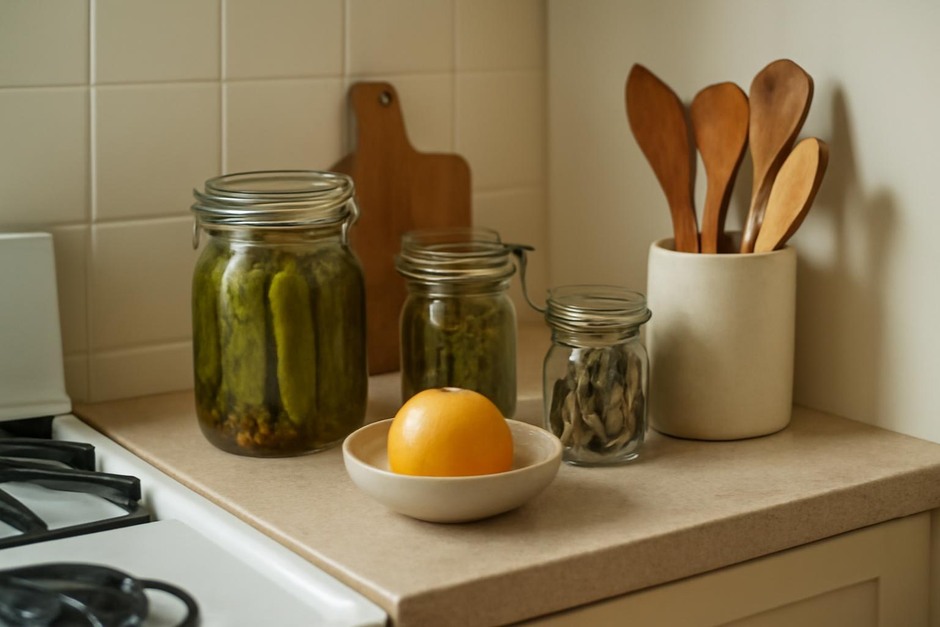
Pickling has long been a way to extend the life of vegetables. In a small kitchen, adapt the method to short batches: slice cucumbers, carrots, or radishes, add a simple brine of vinegar, water, salt, and a touch of sweetener if desired, and flavor with a bay leaf, peppercorns, or mustard seed. Let jars rest in the refrigerator for a few hours. These quick pickles take little space, add bright flavor to meals, and echo the traditional value of changing the season’s surplus into a lasting condiment.
2. Hanging and Drying Herbs
Before refrigerators and freezers, herbs were bundled and hung to dry. In a modern apartment, tie small bunches with twine and hang them near a light, dry window or in an airy corner. Alternatively, spread sprigs on a cooling rack or a small baking sheet. Dried herbs store compactly in labeled jars and bring concentrated flavor to winter dishes.
3. Citrus Preservation for Zero-Waste Flavor
Whole preserved citrus is a staple in many culinary traditions. A simplified, space-conscious approach is to zest citrus into a jar with sugar for an aromatic seasoning, or to dry peels on a rack for later infusing in teas and stews. These small actions repurpose what would otherwise be discarded and create a shelf-stable flavor reserve like the pantries of the past.
4. Cold Storage Corners and Time-Shifted Cooking
Historically, cellars and cool pantries regulated temperature. Today’s equivalent can be a shaded shelf or the coolest corner of a balcony. Store root vegetables or winter squash there for short-term use. Pair storage with time-shifted cooking: roast or stew vegetables in large batches and portion meals for the week—an old strategy for reducing daily preparation without dominating kitchen space.
Practice Checklist
- Start small: Choose one technique—pickling, drying herbs, or zesting citrus—and limit the first batch to amounts that will be used within two weeks.
- Gather three versatile tools: a set of mason jars, a small baking sheet or cooling rack, and kitchen twine.
- Designate a “cool corner”: a shelf or basket where durable produce and preserved jars live out of direct sun.
- Daily five-minute habit: each evening, set aside a few minutes to prep or check a batch (turn jars, hang a new herb bunch, collect peels).
- Label and date: write simple labels to track contents and avoid waste through forgotten jars.
- Taste and adjust: use the preserved items actively—add a spoon of quick pickles to a salad, sprinkle dried herbs on dinner—to learn how they influence meals.
By borrowing the rhythm and restraint of historic household habits, small kitchens can gain flavor, reduce waste, and build a manageable routine. The key is modest, repeatable actions that fit the scale of daily life, turning preservation from a project into a comforting part of home.